
English| USD
Suggested for you
More currencies
Choose a language
The Gallipoli Peninsula lies 320 kilometers southwest of Istanbul across the Dardanelles Strait. Reaching Eceabat—the gateway town to the battlefields and memorials—requires either an overland bus journey or a combination of road and ferry crossings. No direct rail service connects the two destinations.
Quick answer
The primary route from Istanbul to Gallipoli combines a bus from Istanbul to Çanakkale (five to six hours) followed by a 30-minute ferry crossing to Eceabat on the Gallipoli Peninsula. Buses depart hourly from Istanbul's main otogar terminals. Private transfers reduce total travel time to approximately four and a half hours door-to-door. The journey covers 320 kilometers with the Dardanelles Strait forming the final crossing point.
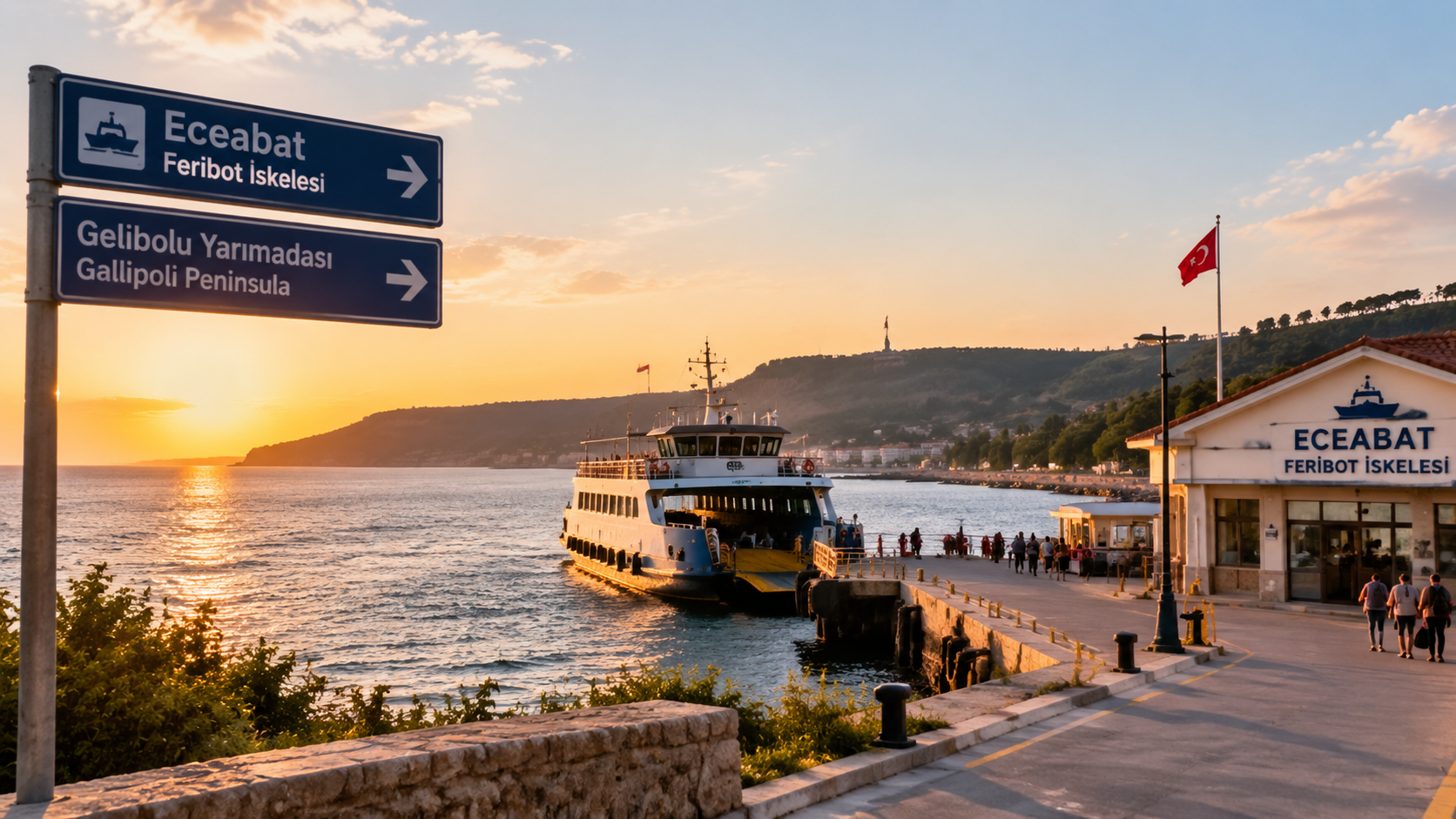
Most visitors underestimate the logistical split: reaching Gallipoli means reaching Eceabat, the small port town on the peninsula's eastern shore where the battlefields, cemeteries, and visitor infrastructure begin. Istanbul sits on the opposite side of the Sea of Marmara and the Dardanelles, requiring both overland transit and a water crossing. Public buses from Istanbul's Esenler or Harem otogar reach Çanakkale in five to six hours depending on traffic through Tekirdağ and the coastal highway. The route skirts the northern shore of the Sea of Marmara before turning south toward the Dardanelles. Ferries from Çanakkale to Eceabat run every hour during daylight and take 30 minutes to cross the strait. Passengers disembark directly at the peninsula and can walk to central Eceabat hotels or catch a dolmuş minibus to ANZAC Cove and Lone Pine Cemetery. Buses coordinate loosely with ferry schedules but rarely wait—missing a connection adds an hour. Private transfers eliminate the ferry coordination entirely by driving the longer land route around the Gulf of Saros via Keşan and Gelibolu town. The detour adds 80 kilometers but cuts total journey time to four and a half hours by removing the terminal wait and ferry boarding. Organized day tours from Istanbul follow the same overland route and include a guide for the battlefield sites. Most depart before dawn to maximize time on the peninsula before the return drive. The battlefields open at 08:30 and lie scattered across 15 kilometers of coastline and ridgeline. Visitors arriving by midday public transport face afternoon heat and limited daylight for site exploration. Early morning arrival improves conditions for walking between memorials and allows time for the Turkish and ANZAC sectors before tour groups concentrate at Lone Pine and Chunuk Bair after 11:00. Eceabat functions as the staging point: ferries dock at its terminal, buses drop passengers at the harbor square, and the access road to the Kabatepe Museum and northern cemeteries begins at the town's western edge. No public transport runs between battlefield sites—visitors rely on rental cars, taxis, or pre-arranged guided transport.
“Reaching Gallipoli means reaching Eceabat, the small port town on the peninsula's eastern shore where the battlefields and visitor infrastructure begin.”
This plan suits day-trippers arriving by 08:30–09:00, covering the peninsula's key sites in a single visit. Budget 5–6 hours for a thorough tour of the main battlefields and memorials.
Start at the Kabatepe Museum to understand the campaign's context through artifacts and maps. Spend 45 minutes here before heading to the battlefields.
Walk the landing beach where Allied forces came ashore, then visit Beach Cemetery. The compact site takes 30 minutes; morning light is best for photography.
Explore Lone Pine Cemetery and the preserved Turkish trenches at Johnston's Jolly, just meters apart. Allow 45 minutes to walk between positions and read the interpretive panels.
Drive to the high ground at Chunuk Bair for panoramic views of the peninsula. The New Zealand Memorial and preserved trenches require 40 minutes.
Visit the Turkish memorial honoring the regiment that held this critical position. A 20-minute stop before heading to Cape Helles.
Tour the Helles Memorial and V Beach Cemetery, the site of another major landing. Plan 45 minutes for the memorial walls and surrounding cemeteries.
Return to Eceabat for a late lunch at a waterfront restaurant. Most serve fresh fish and meze; budget an hour before your return journey.
Pack light but prepare for uneven terrain, sun exposure, and a full day outdoors on the peninsula.
Everything you need to know about how to get from istanbul to gallipoli
Travelers looking for how to get from istanbul to gallipoli can choose between public buses or private transfers. Direct buses from major Istanbul terminals provide a cost-effective option for reaching the Eceabat region.
Booking a professional Gallipoli battlefield excursion is a popular alternative for those researching how to get from istanbul to gallipoli with guided logistics. These services typically handle all transportation and provide historical context during your visit.
The most efficient way for how to get from istanbul to gallipoli is often a pre-arranged tour or private car, as public transport requires multiple connections. Visitors should plan their route carefully to ensure they reach the peninsula during optimal hours.
If you are short on time, joining an organized trip is the most streamlined method for how to get from istanbul to gallipoli and back. This ensures you navigate the Dardanelles crossing and local transport routes without delays.